

Introduction
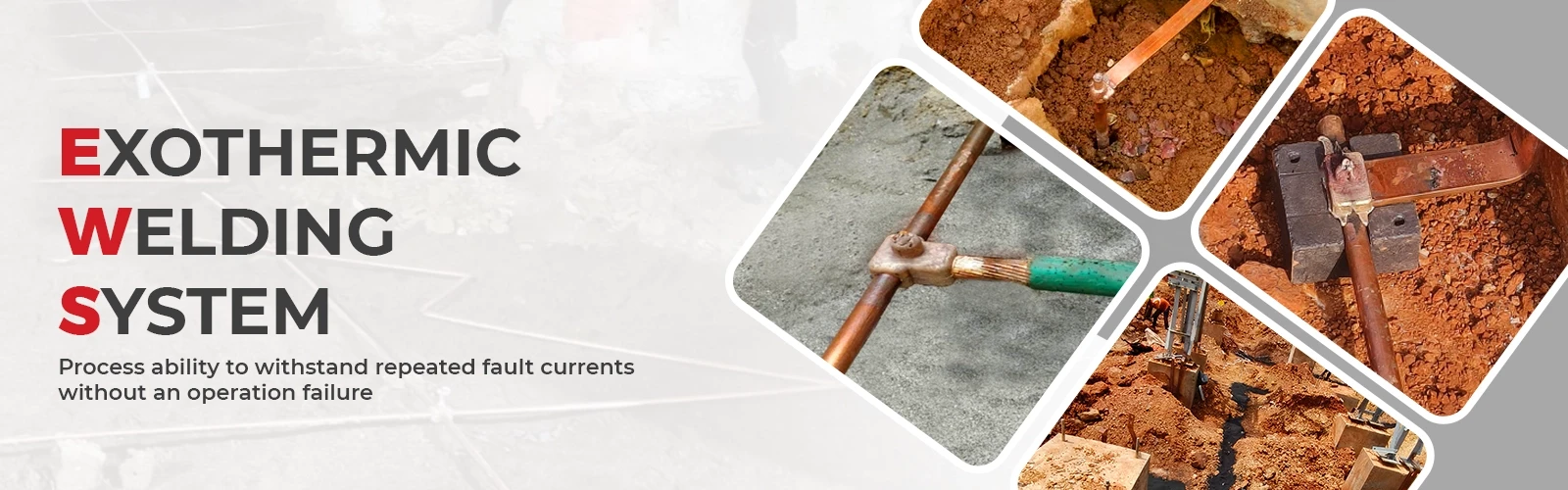
Exothermic welding, also known as exothermic bonding or thermite welding, is a reliable and durable method for creating permanent electrical connections. This process uses a chemical reaction to produce intense heat, melting metal components together to form a molecular bond. JMV LPS LTD offers high-quality exothermic welding solutions that ensure robust and long-lasting connections for various applications.
Exothermic welding offers preferred choice for critical electrical connections in various industries. With its low resistance, high durability, and ease of installation, exothermic welding provides a cost-effective solution for achieving long-lasting and efficient electrical connections.
Relevant Standards
IEEE 837: Standard for Qualifying Permanent Connections Used in Substation Grounding
NBC 2016: National Building Code of India
IEEE 80: Guide for Safety in AC Substation Grounding
Salient Features
Permanent Connection: Creates a molecular bond between conductors, ensuring long-term reliability.
Low Resistance: Produces connections with low resistance, optimizing electrical conductivity.
High Durability: Welded joints are resistant to corrosion, mechanical stress, and environmental factors.
Wide Range of Applications: Suitable for use in various industries, including electrical, telecommunications, rail, and construction.
Easy Installation: Simple and straightforward process requires minimal training and equipment.
Advantages over Other Connection Methods
Low Resistance: Exothermic welding produces connections with significantly lower resistance compared to mechanical or compression connections. This ensures efficient electrical conductivity and minimizes energy loss.
Durability: Welded joints are highly durable and resistant to corrosion, vibration, and thermal cycling. They maintain their integrity even in harsh environmental conditions, ensuring long-term reliability.
Consistency: Exothermic welding provides consistent results, regardless of the conductor size or material. This uniformity in connection quality reduces the risk of failures and ensures uniform performance across the system.
Safety: The exothermic welding process is safe and reliable when performed correctly, with minimal risk of accidents or injuries.
Longevity: Welded connections have a longer service life compared to mechanical or compression connections, reducing the need for frequent maintenance or replacement.
Applications
Electrical Grounding: Used for creating grounding connections in electrical systems, ensuring effective dissipation of fault currents.
Telecommunications: Ideal for bonding copper or aluminum conductors in telecommunication networks, providing reliable signal transmission.
Railways: Widely used for bonding rail joints and signaling systems in railway infrastructure, ensuring safe and efficient operation.
Construction: Suitable for bonding rebars in concrete structures, providing structural integrity and electrical continuity.
Industrial Facilities: Used for bonding conductors in industrial facilities, such as power plants and manufacturing plants, ensuring reliable electrical connections.